

ATEX explosion protection in the chemical industry and solvent handling
Flammable liquids, solvent vapours, low flash points – the chemical industry is one of the strictest areas for ATEX compliance. Zone classification, EPD and Ex inspection per IEC 60079.
Why is a solvent-based chemical environment especially risky?
Flammable liquids and solvents are among the most critical material groups for explosion protection. It is not the liquid itself but the vapour it produces that ignites – and that vapour can be present in the air, invisibly, even at room temperature.

Vapour pressure & evaporation
High-vapour-pressure solvents (acetone, hexane) evaporate fast. Even a small leak is enough for an explosive concentration, especially in unventilated spaces.
Static charge
Solvents generate static charge during filling, pumping and mixing. Without proper earthing and bonding, a spark's ignition energy can reach the ignition threshold.
Temperature sensitivity
Heated processes (dryers, reactors) increase evaporation. The T-class must be set to the solvent's auto-ignition temperature.
Typical hazard sources at chemical sites
During a chemical ATEX survey we pay the most attention to these points, because they produce the most non-conformities on regulatory inspections too:
| Location / process | Main hazard | Typical zone |
|---|---|---|
| Filling & emptying station | Vapour release, static charge | Zone 1 (filling point), Zone 2 (area) |
| Solvent storage tanks | Vent-line release, leakage | Zone 1/2 around the tank |
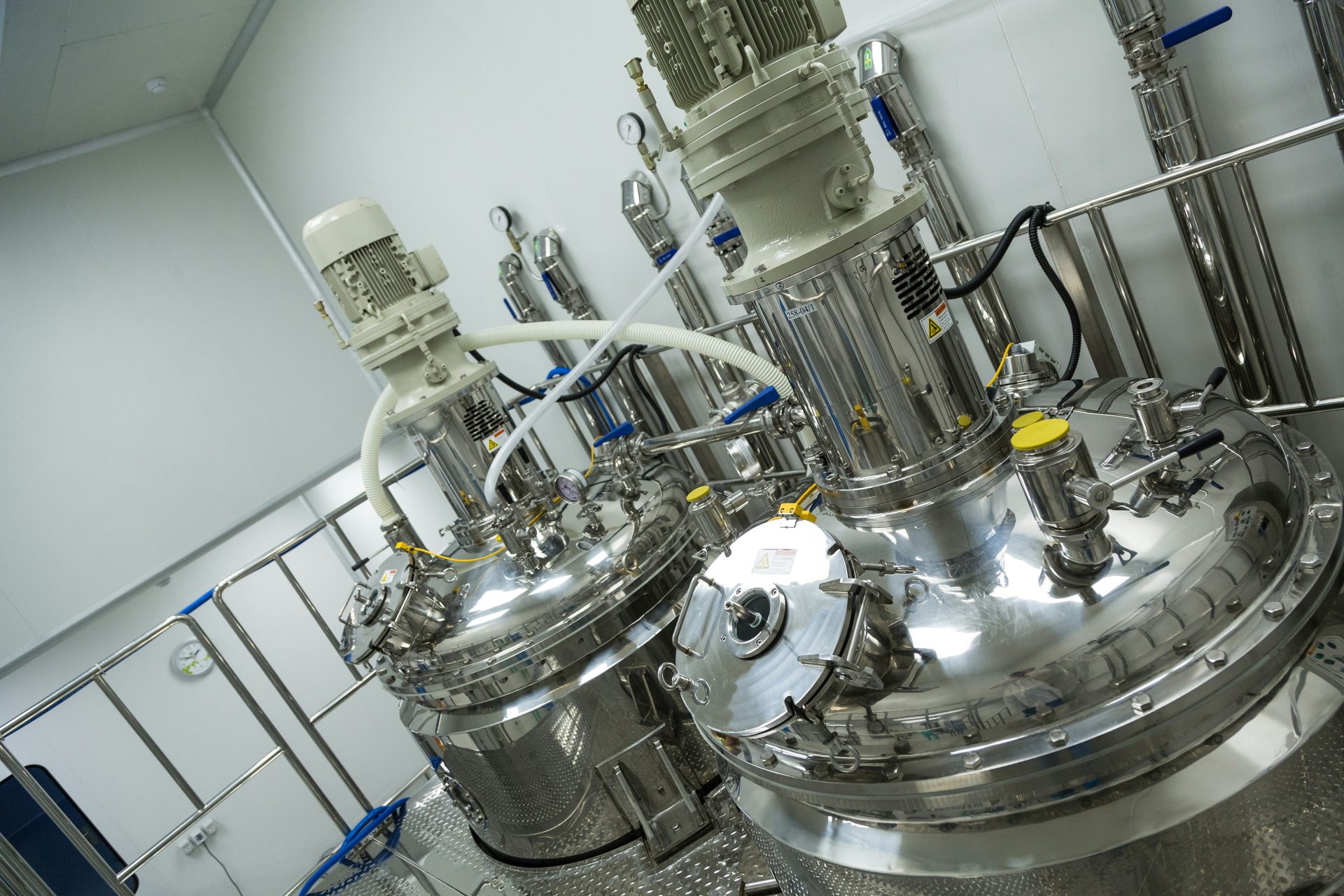
| Mixers, reactors | Solvent vapour around openings | Zone 1 (at openings), Zone 2 (in rooms) |
| Dryers (tray, tunnel) | High temperature + solvent vapour | Zone 1 inside, Zone 2 at extractors |
| Pumps, compressors | Seal leakage | Zone 2 |
| Laboratories | Small-scale but cumulative vapour | Zone 2 (depending on ventilation) |
Zone classification and gas groups for chemical solvents
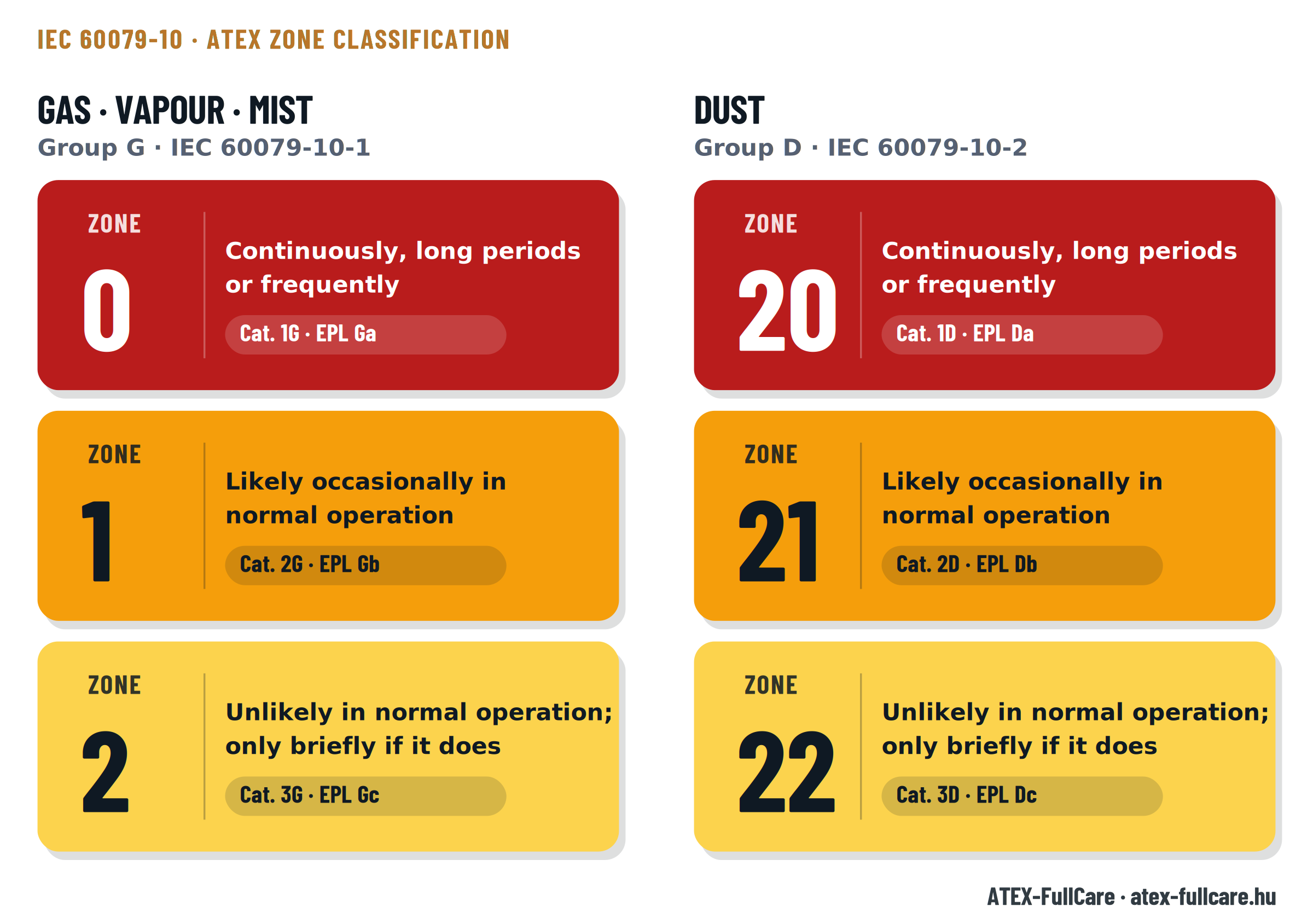
When determining the zone, the ventilation conditions, near-source concentrations and evaporation rate are decisive. The gas group is tied to the substance – it drives the selection of Ex equipment. More: ATEX zone classification.
| Gas group | Typical substances | Minimum required marking |
|---|---|---|
| IIA | Propane, acetone, ethanol, petrol | Ex IIA or higher |
| IIB | Ethylene, diethyl ether, cyclopentane | Ex IIB or IIC |
| IIC | Hydrogen, acetylene, carbon disulfide | Ex IIC mandatory |
Ventilation calculation and LEL determination
The extent of a zone is not arbitrary – under IEC 60079-10-1 it must be determined by a ventilation calculation that estimates the likely extent of the explosive atmosphere. This matters especially at dryers, where reducing the ventilation rate can shift the zone boundary.
Static charge in solvent processes
Static electricity is one of the most underestimated risks in chemical explosion protection. Filling, pumping and mixing cause charge separation – and the resulting potential difference can create a spark.
- Every metal tank, fill pipe and transport container must be earthed and connected by equipotential bonding (EPB).
- Plastic tanks and hoses require conductive or anti-static material.
- Limit the filling rate for high-resistivity solvents (e.g. hexane).
- Anti-static footwear and clothing for personnel in Zone 1 areas.
- A bonding/grounding connection at the filling point for every tanker.
Most common ATEX faults on a chemical inspection
These are what we find most often at chemical sites – each one is a compliance risk and a potential ground for an insurer to refuse a claim:
- Wrong gas group (IIA equipment used with IIB/IIC substances).
- Missing or damaged cable gland – flame-path integrity not ensured.
- Non-Ex-rated motor in a dryer (in a Zone 1 area).
- No documented earthing and equipotential bonding (EPB) network.
- Outdated EPD – not updated after a technology change.
- Missing stopping plugs on cable entry openings.
- The T-class does not account for the substance's auto-ignition temperature.
What does the chemical ATEX inspection include?
The on-site survey and documentation follow IEC 60079-17 (inspection) and IEC 60079-10-1 (zone classification):
Zone classification & zone map
Identifying every hazard source, determining the extent of the zones, drawing documentation – for indoor and outdoor spaces alike.
Ex equipment check
Visual, close and detailed inspection. Gas group, T-class, cable gland, IP rating and certificate checked on every device.
Earthing & EPB audit
Checking the equipotential bonding network: connectivity and measured resistance of filling points, tanks and pipework.
EPD preparation / update
Explosion protection documentation per decree 3/2003 (FMM–ESzCsM), with a prioritised defect list and action plan. See: EPD preparation & update.
- Photo-documented inspection report per IEC 60079-17.
- Prioritised defect list (immediate / planned / next audit).
- Itemised repair recommendations with a materials list.
- The report is available in English too (for insurer / parent-company audits).
Do you have a solvent or chemical site?
Request a free 30–60 minute online needs assessment. We discuss the technology and your current documentation status, and I give you a concrete proposal for the next step.