

ATEX explosion protection in the printing industry – flexo & gravure solvents
The explosive vapours of solvent-based inks, IPA and ethyl acetate are especially dangerous in the dryers and at the filling stations. Zone classification, LEL calculation, EPD and Ex inspection – with printing-industry experience.
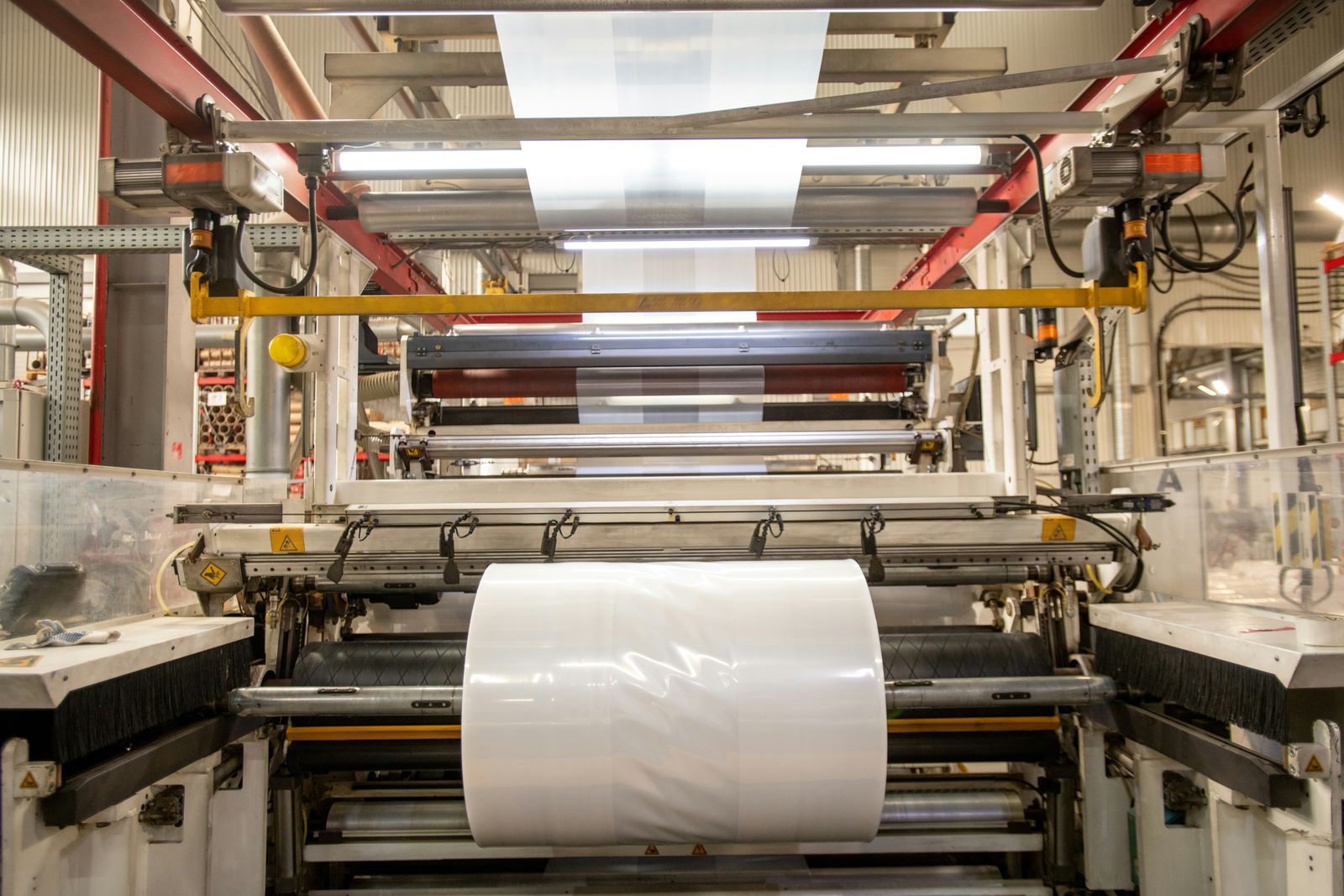
Why is the dryer the riskiest point in printing?
In the printing process, the concentration of solvent vapour evaporating from the ink peaks in the dryer. This is the point where the heat + solvent-vapour combination is most likely to reach the 25% mark of the explosive range (LEL) – above which the ATEX requirements are mandatory.
Printing
Ink application
Zone 2Drying
Max. solvent-vapour concentration
Zone 1 (inside)Extraction
Vapour removal
Zone 2Ink filling
Solvent-vapour release
Zone 1Solvent storage
Storage room
Zone 2ATEX classification of typical printing solvents
| Solvent | Flash point | LEL–UEL | Gas group | Min. equipment |
|---|---|---|---|---|
| Ethyl acetate | −4 °C | 2–11.5% | IIA | Ex IIA T3 |
| IPA (isopropanol) | 12 °C | 2–12.7% | IIA | Ex IIA T3 |
| Ethanol | 13 °C | 3.3–19% | IIB | Ex IIB T3 |
| Toluene | 4 °C | 1.1–7.1% | IIA | Ex IIA T3 |
| Acetone | −18 °C | 2.5–12.8% | IIA | Ex IIA T4 |
| MEK (methyl ethyl ketone) | −9 °C | 1.8–10% | IIA | Ex IIA T3 |

LEL concentration calculation and ventilation requirement
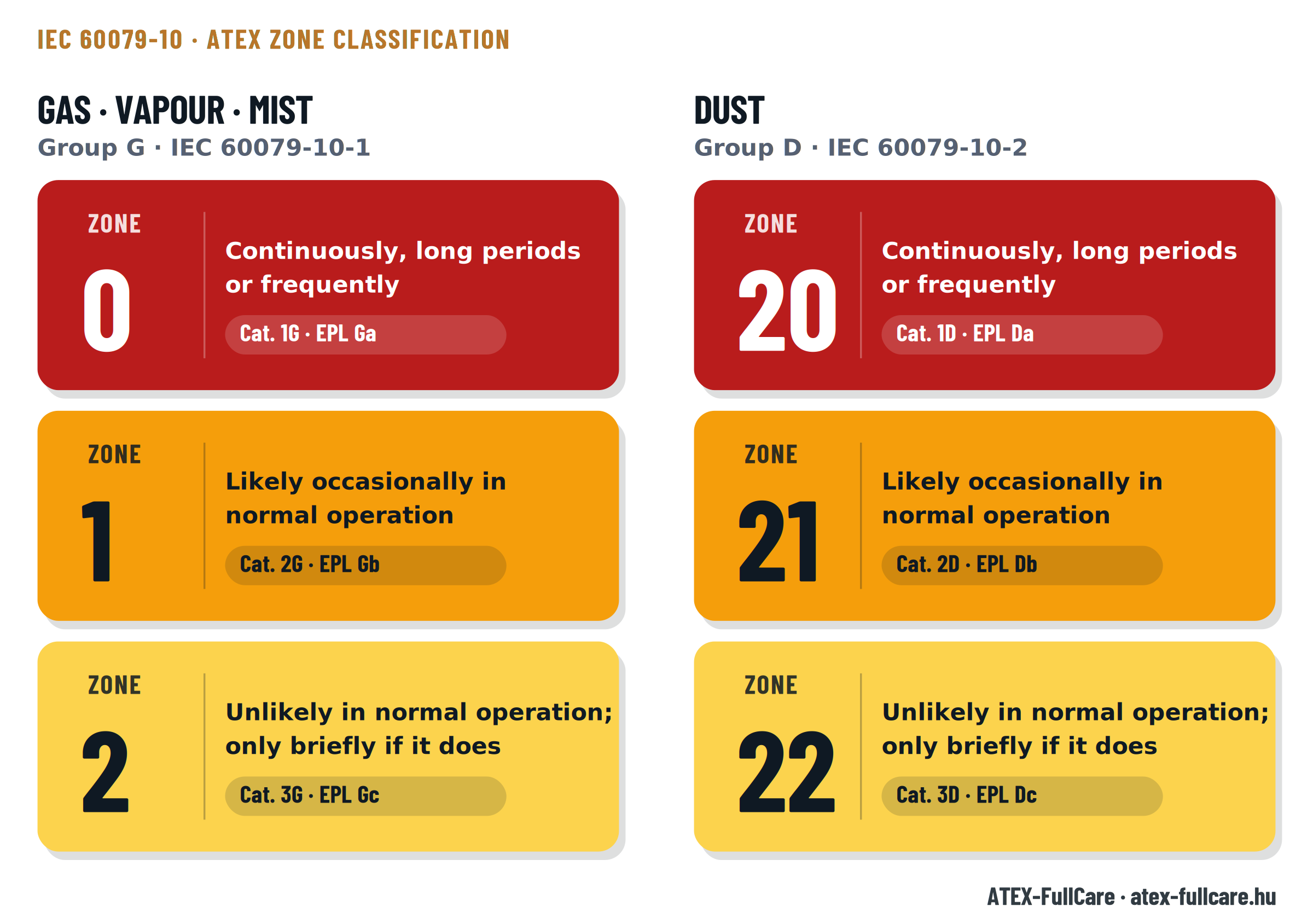
Under IEC 60079-10-1, the extent and type of the zone is determined by a ventilation calculation. Reducing the extraction air flow inside the dryer (to save energy) can shift the zone boundary and cause a compliance problem. The exact determination is the task of the ATEX zone classification:
- Solvent-vapour concentration inside the dryer must be continuously monitored – with an LEL% meter.
- Max. permitted level during operation: 25% LEL (25% of the lower explosive limit).
- Above 25% LEL the dryer must shut down automatically (interlocked extraction system).
- Ex design of the extraction fan and its drive motor is mandatory.
- During ink changes and filling there can be transient concentration peaks – this must be documented in the risk assessment.
Most common ATEX faults at printing sites
These are what we find most often – each one is a compliance risk and a potential ground for an insurer to refuse a claim:
- Non-Ex fan motor in the dryer (in a Zone 1 area).
- No LEL monitor in the dryer, or an uncalibrated sensor.
- Missing interlock: the dryer does not stop automatically on an LEL alarm.
- No zone classification at the filling station, and no Ex gland on the control cabinet.
- IIA-marked equipment used for an ethanol-based ink (IIB is required).
- No ATEX-rated electrical distribution in the solvent storage room.
- The procedure for handling ink-composition changes is missing from the EPD.
Printing-industry ATEX inspection – what it includes
The on-site survey and documentation follow IEC 60079-17 (inspection) and IEC 60079-10-1 (zone classification):
Zone classification for dryers and filling points
Identifying every vapour-emission source, LEL-based zone-boundary calculation, drawing documentation.
Dryer-system Ex audit
Checking the motor, fan, control cabinet and LEL sensor. Evaluating the interlock logic.
EPD / explosion protection document
A complete EPD per decree 3/2003, accounting for solvent blends, with a prioritised defect list.
Fire-protection interface
Separating the ATEX and fire-protection scopes – where one ends and the other begins. Aligned documentation.
Do you run a printing site with solvent-based inks?
Request a free 30–60 minute online needs assessment. We discuss the dryers, the solvents and your current ATEX status – and I close with a concrete proposal.