

ATEX explosion protection at onshore and offshore oil & gas sites
Compressor houses, pump stations, wellheads and platform modules – oil & gas is one of the strictest areas for explosion protection. Zone classification, IEC 60079-17 inspection and EPD – with 17 years of onshore and offshore experience.
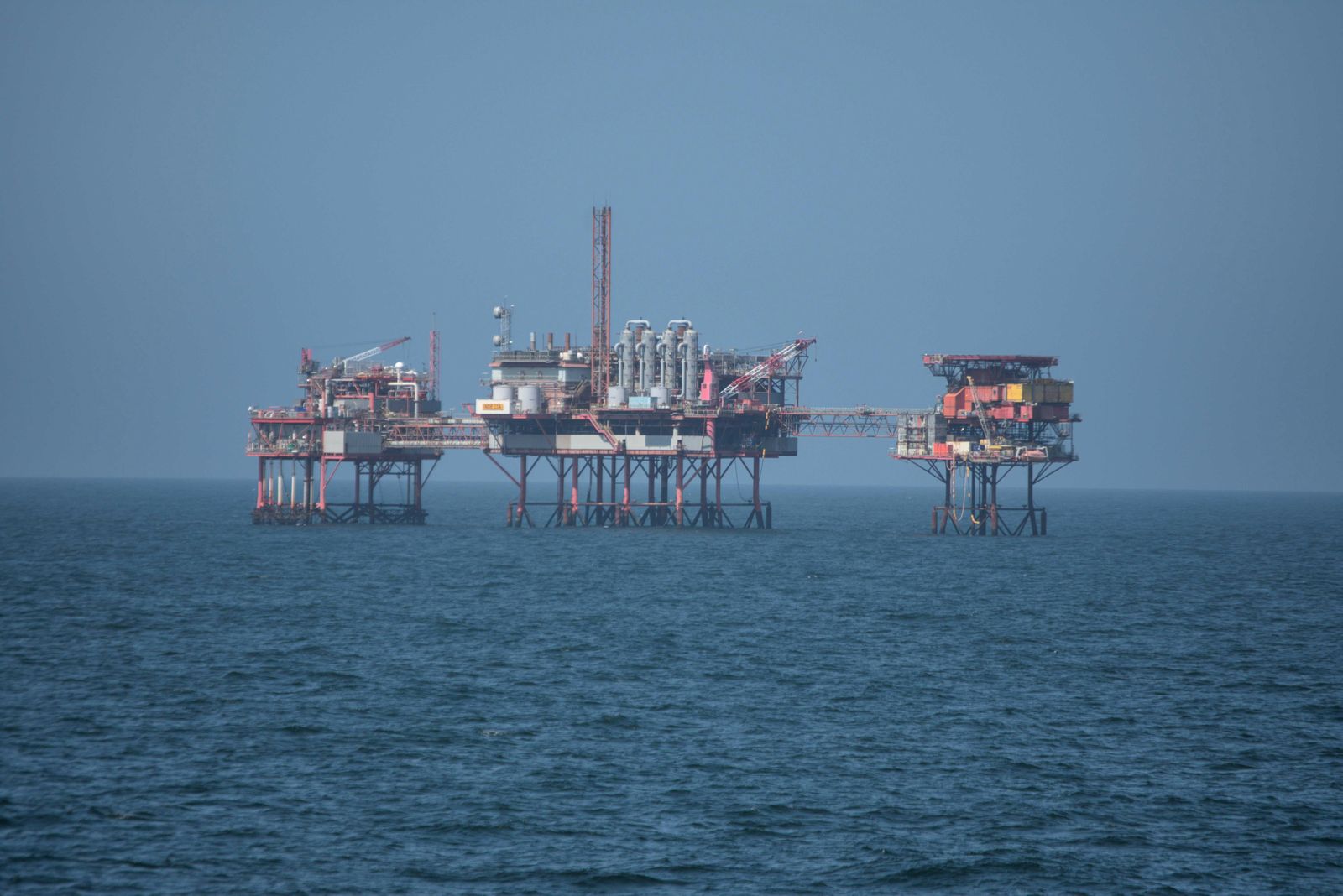
Onshore and offshore – what is shared, and what differs?
On the equipment side, both environments rest on the same standard family: IEC 60079 (Ex equipment, zone classification, inspection). The legal framework and the physical conditions, however, differ – and these determine the extent of the zones and practical compliance.
🏭 Onshore land
- Open plant, typically natural or hybrid ventilation.
- Legal basis: EU ATEX directive (2014/34/EU equipment + 1999/92/EC workplace), HU: decree 3/2003.
- More open spaces → zones are often smaller in extent.
- Sites: wellhead, compressor and pump station, gas treatment, metering station.
🌊 Offshore sea
- Enclosed modules, forced-HVAC pressurized Ex rooms (pressurization).
- Legal basis: IEC 60079 + national offshore regime (e.g. Danish offshore, NORSOK NO).
- Limited ventilation and evacuation → stricter zones, F&G / ESD integration.
- Salt, corrosive environment → state of glands and enclosures is critical.
Onshore and offshore oil & gas sites – who is affected?
ATEX/Ex compliance is mandatory at every site where flammable gas is present in the process – from extraction to processing, on land and on a platform alike:
Gas production and extraction sites
Wellheads, gathering lines, gas-separator units, flare systems – all require zone classification.
Compressor and pump stations
High-pressure gas handling, seal points, fan systems – most non-conformities concentrate here.
Metering stations, PIG receivers
Pressure gauges, flow controllers, isolation valves – the Ex instruments here need regular compliance checks.
Processing and receiving stations
Gas treaters, dryers, CH₄/CO₂ separators – complex, mixed-zone sites, often with incomplete documentation.
Platform process modules
Separation, compression and gas handling in enclosed modules – pressurized Ex rooms and dense cabling.
Wellbay / drilling module
Wellheads on the platform, in an enclosed or semi-enclosed space – higher gas-leak risk and a higher zone.
IIB and IIC gas groups – when is which required?
The composition of the gas in use determines the mandatory gas group. This is the basis for equipment selection, Ex marking and the sizing of the flameproof enclosure (Ex d):
| Gas / material | Gas group | Min. equipment marking | Typical location |
|---|---|---|---|
| Methane, natural gas | IIB | Ex IIB (min.) | Gas pipeline, pump station |
| Propane, butane | IIA | Ex IIA (min.) | LPG storage |
| Hydrogen (H₂) | IIC | Ex IIC mandatory | Hydrogen processes, batteries |
| Acetylene | IIC | Ex IIC mandatory | Welding areas |
| H₂S (hydrogen sulfide) | IIB | Ex IIB + toxic protection | Sour-gas handling areas |
| Mixed gas (CH₄ + H₂) | IIC | Ex IIC mandatory | Reformer, electrolyser |
Typical ATEX zones at onshore and offshore sites
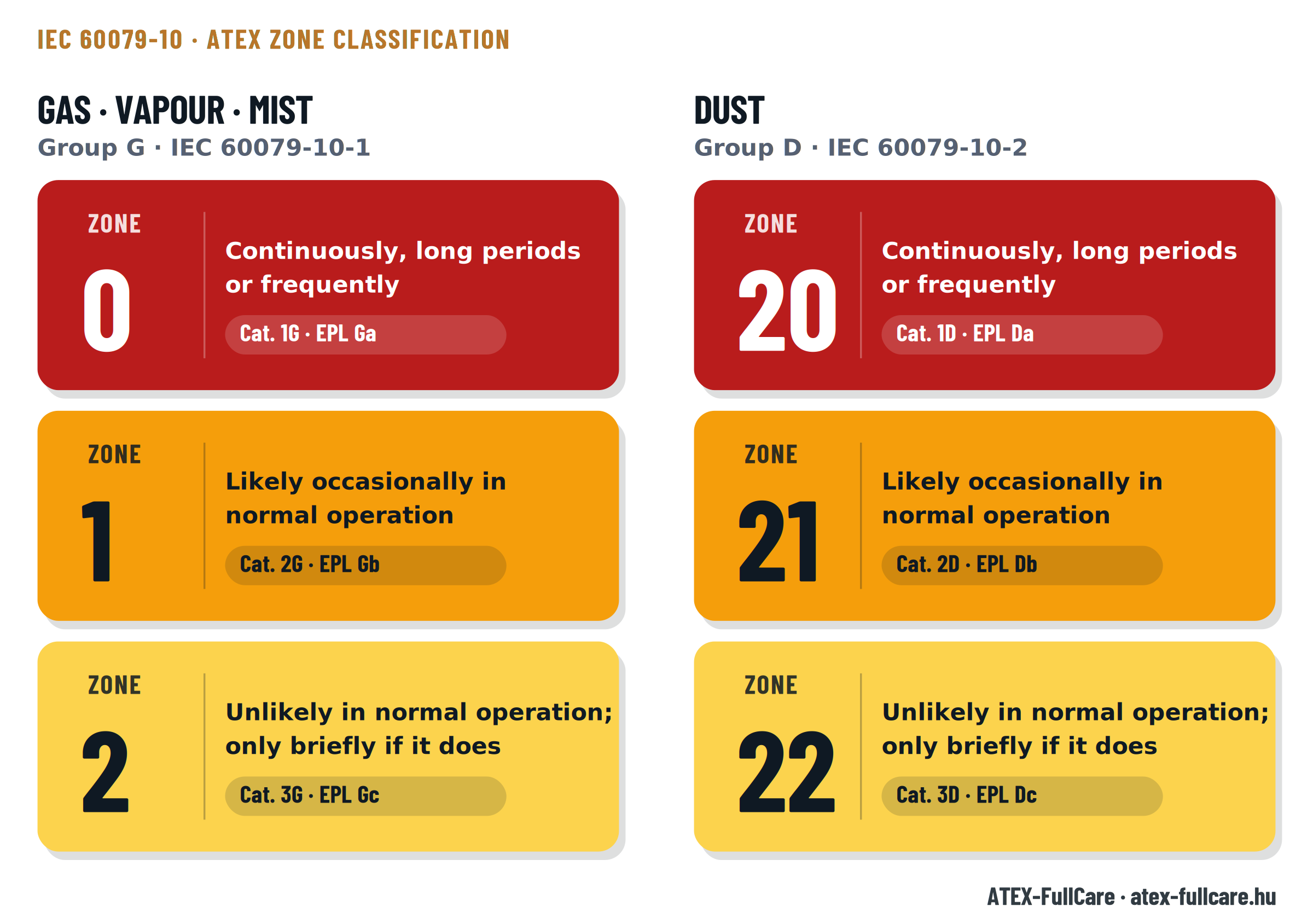
The extent and type of a zone are determined by the ventilation and the source of release (IEC 60079-10-1). The exact determination is the task of the ATEX zone classification:
| Location | Environment | Main source of hazard | Zone |
|---|---|---|---|
| Compressor house (enclosed) | Onshore / Offshore | Seal leakage | Zone 1 (unventilated) / Zone 2 (ventilated) |
| Pump station (outdoor) | Onshore | Seal points, flanges | Zone 2 |
| Top of gas separator | Onshore / Offshore | Vent-line release | Around Zone 1 |
| Wellhead / production head | Onshore | Gas leak in normal operation | Zone 1 (immediate wellhead area) |
| Offshore wellbay / drilling module | Offshore | Gas leak in an enclosed/semi-enclosed module | Zone 1 (inside the module) |
| PIG receiver / launcher | Onshore / Offshore | Gas release on opening | Zone 1 (on opening), Zone 2 (operation) |
| Flare area | Onshore / Offshore | Unburnt gas | Zone 2 (transient) |
| Gas meter / instrument room | Onshore / Offshore | Leakage at sampling points | Zone 2 |
Offshore platform ATEX specifics
On a platform, the enclosed space and the limited escape routes mean that explosion protection is tightly interwoven with ventilation and the emergency shutdown systems:
- HVAC pressurization: Ex rooms (e.g. switchgear, control) keep gas out by overpressure – a loss of overpressure means a zone change and a shutdown.
- F&G and ESD integration: gas and fire detection wired directly into the emergency-shutdown (ESD) logic – the Ex compliance and calibration of the detectors is critical.
- Corrosion: salt air attacks glands, enclosures and cable entries – the integrity of the flameproof gap (Ex d) requires regular inspection.
- Enclosed modules: in an unventilated module, Zone 2 easily becomes Zone 1 – the ventilation calculation is especially sensitive here.
Hot work permits and work permits in ATEX areas
Oil & gas compliance applies not only to the permanent equipment, but also to the permit-to-work (PTW) system. At onshore sites this is often the least documented area:
- Hot work permit (welding, grinding, cutting): prohibited in an ATEX zone without gas testing and authorization.
- Cold work permit: mechanical work in a Zone 1 area – a gas-free certificate is required.
- Electrical isolation: for electrical work in an ATEX area, the isolation procedure must also include ATEX aspects.
- Confined space entry: with a gas-testing protocol and rescue equipment.
- Work procedures must be documented in the EPD and the operating manual.
Periodic ATEX inspection per IEC 60079-17 – the process
IEC 60079-17 prescribes three levels of inspection. At oil & gas sites the mandatory cycle is typically the annual visual and the 3–5 year detailed inspection:
Visual inspection (annual)
Visible damage, corrosion signs, missing parts, damaged cable entries. State of fuses and interlocks.
Close inspection (1–3 yr)
Visual + checking of covered surfaces without opening. Glands, covers and fastenings examined.
Detailed inspection (3–5 yr)
Opening, internal check, measurements. Flameproof gap, clearance, insulation resistance. Photo-documented report.
- Every inspection closes with an IEC 60079-17 photo-documented inspection sheet.
- Prioritised defect list: immediate / planned / deferrable to the next cycle.
- Repair recommendation with a bill of materials and equipment specification.
- English-language report available (parent company, insurer, foreign partners).
Most common ATEX faults at oil & gas sites
These are what we find most often – each one is a compliance risk and a potential ground for an insurer to refuse a claim:
- IIA equipment used for a IIB gas group (a decision made without gas analysis).
- Non-Ex motor on the ventilation fan in the compressor house – in a Zone 1 area.
- Missing or damaged gland at cable-entry points.
- No documented zone classification for the immediate wellhead and PIG-receiver area.
- The last detailed IEC 60079-17 inspection is more than 5 years old.
- The PTW system does not include ATEX aspects.
- The EPD is out of date – not updated after a process modification.
- Offshore: the HVAC overpressure alarm is not wired into the shutdown logic of the Ex room.
Oil & gas project experience
Do you run an onshore or offshore oil & gas site?
Request a free 30–60 minute online needs assessment. We discuss the technology, your current ATEX status and the inspection need – and I close with a concrete proposal.