

ATEX explosion protection in the wood industry – sawdust and dusty environments
The explosion risk of sawdust, paper dust and other combustible dusts is often underestimated – yet a single non-compliant motor or an undamped static discharge can cause a disaster. Zone classification, IP-sealing audit and EPD per IEC 60079.
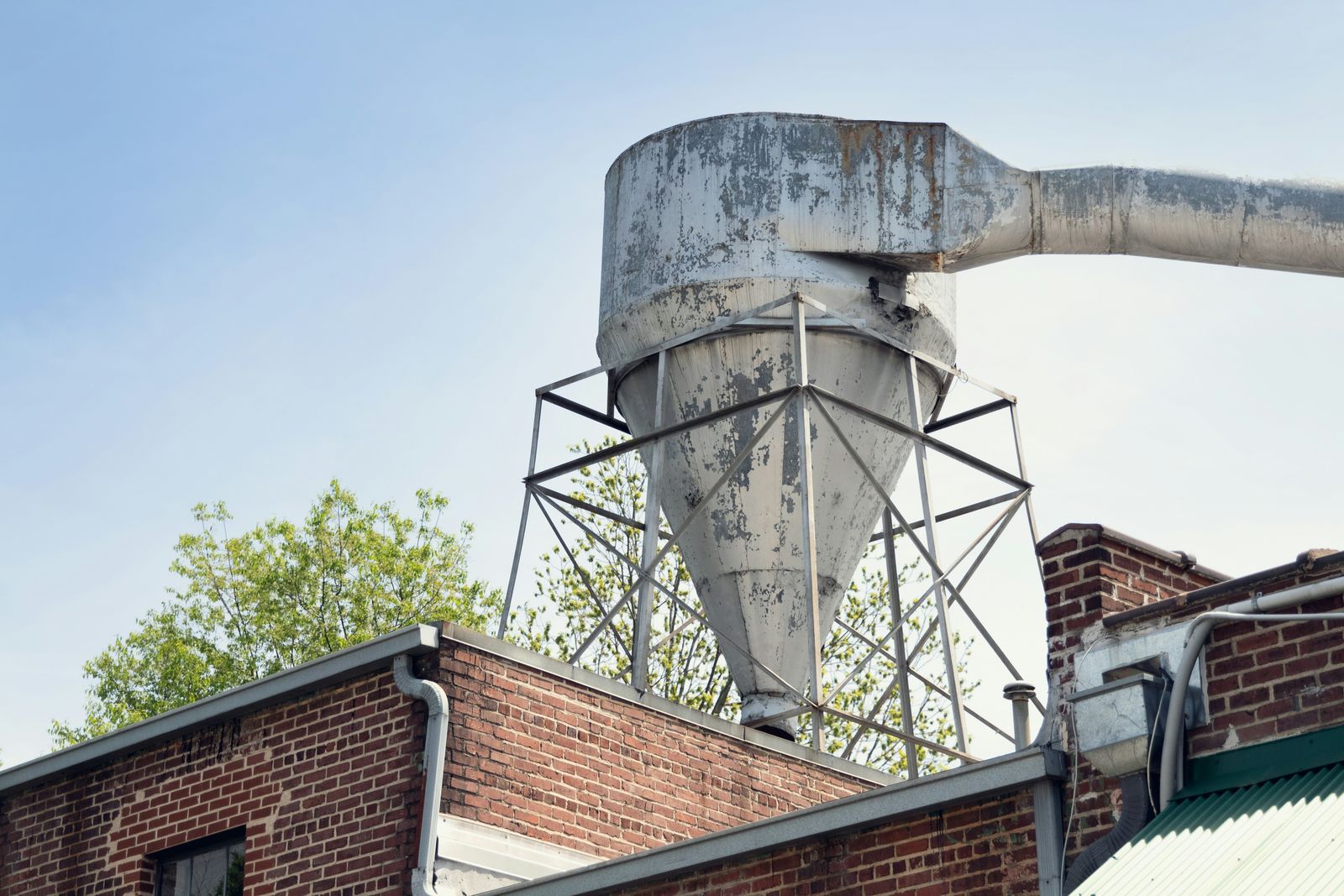
Why does sawdust explode? – the dust cloud and the 5 factors
A dust explosion is not simple combustion, but rapid flame propagation between suspended dust particles. Five conditions must be met at once – and in sawmilling operations all five are often present together:
Particle size and concentration
The smaller the particle size, the greater the surface-to-mass ratio, and the more explosive the dust. Particles below 500 µm are already hazardous – in sawdust, CNC chips and sanding dust these ranges are typical. The minimum ignition energy (MIE) for wood is usually 10–100 mJ, and an electrostatic discharge can exceed that.

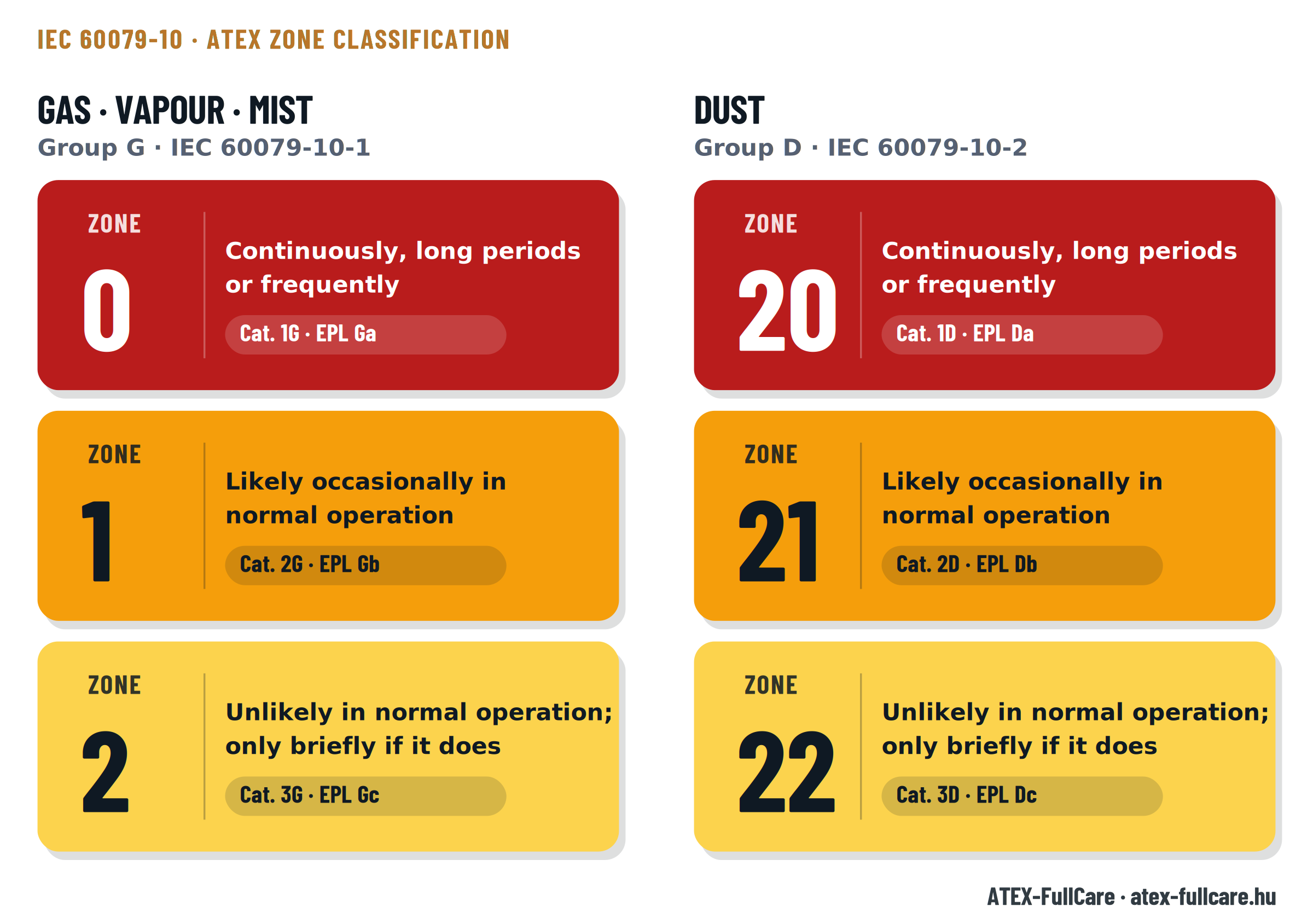
Dust zone classification in the wood industry – 20, 21, 22
In dusty environments we use different zone numbers than for gas. The decisive factor is the probability and duration of the dust cloud – this is recorded by the ATEX zone classification:
| Zone | Description | Typical wood-industry location |
|---|---|---|
| Zone 20 | Continuous / long-lasting dust cloud | Cyclone interior, inside conveying duct, silo |
| Zone 21 | Dust cloud likely in normal operation | Near milling/sanding machines, chip-collection openings |
| Zone 22 | Dust cloud rarely, for a short time | Around conveyors, storage area, operating aisle |
Dust groups – sawdust, paper dust, chips
| Dust group | Typical materials | Min. equipment marking |
|---|---|---|
| IIIA | Combustible flyings (wood fibres, jute) | Ex IIIA |
| IIIB | Non-conductive dust – sawdust, paper dust, grain | Ex IIIB |
| IIIC | Conductive dust – metal chips, coal dust | Ex IIIC mandatory |
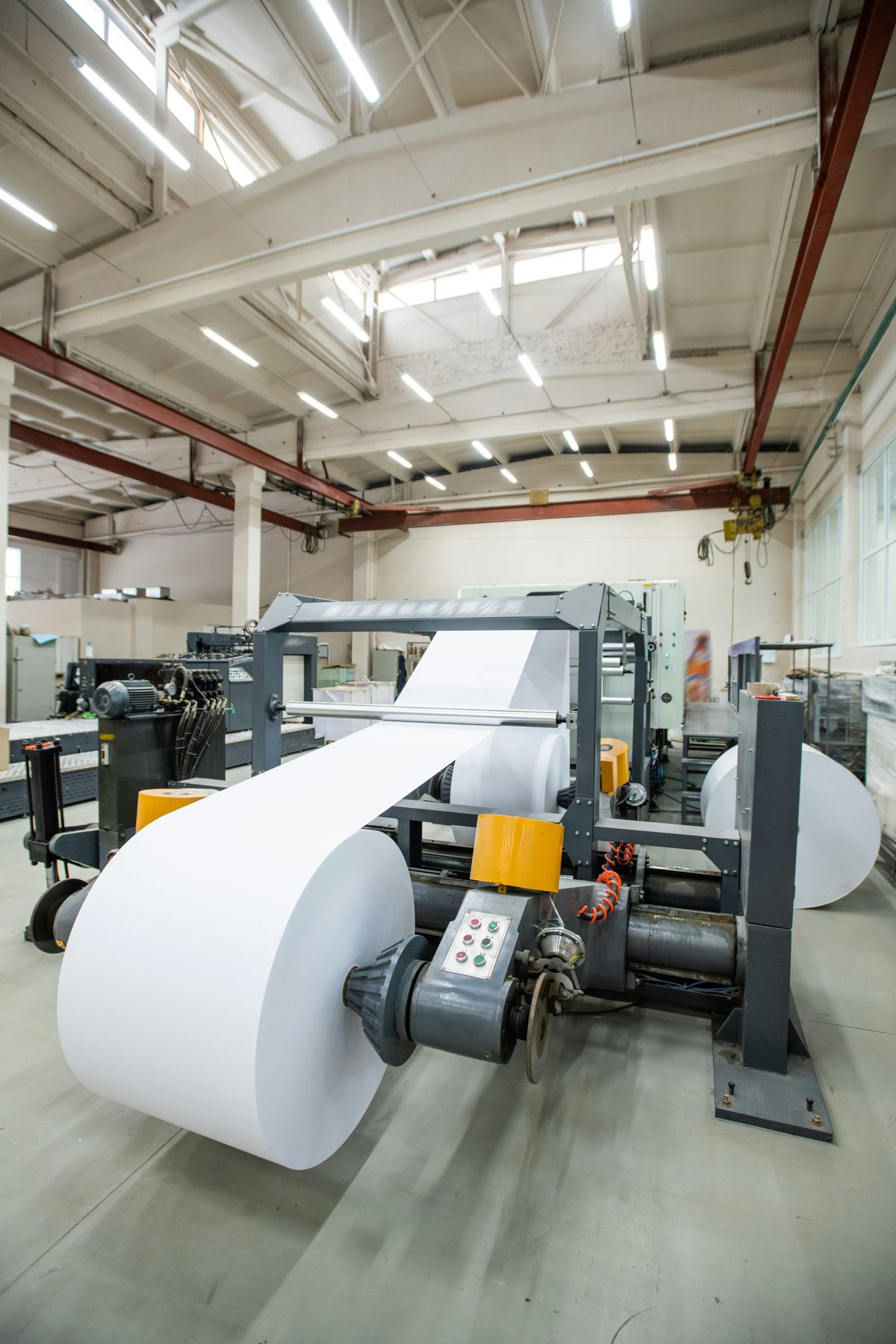
T-class and maximum surface temperature in dust zones
In dust zones, the maximum surface temperature must be referenced to the dust's ignition temperature – and this is a different rule than for gas:
- Ignition temperature of sawdust (dust layer): typically around 250–350 °C.
- Ignition temperature of a dust cloud is higher: 400–500 °C (e.g. wood dust cloud).
- Required max. surface temperature: dust-layer ignition temperature × 2/3.
- Example: if the dust layer ignites at 300 °C, the equipment may produce max. 200 °C surface temperature.
- Marking format:
Ex t IIIB T200°C Db IP6X.
Most common ATEX faults at wood and paper sites
These are what we find most often – each one is a compliance risk and a potential ground for an insurer to refuse a claim:
- Non-dust-tight (below IP5X/IP6X) motor or distribution box in Zone 21.
- Wrong T-class – the dust's ignition temperature is not taken into account.
- Extraction fan not of Ex design – the most critical point upstream of the cyclone.
- Equipment in a Zone 20 with marking suitable only for Zone 22.
- No ATEX zone classification for the cyclone and the chip conveyor.
- Dust deposits as a zone-extending factor are missing from the EPD.
- No documented, regular dust-deposit inspection procedure.
Wood and paper ATEX inspection – what we do
The on-site survey and documentation follow IEC 60079-17 (inspection) and IEC 60079-10-2 (dust zone classification):
Dust zone classification
Surveying every dust source, determining the extent of Zone 20/21/22 per IEC 60079-10-2, with drawing documentation.
IP-sealing & T-class audit
On every Ex device: checking the IP rating and assessing surface temperature against the dust's ignition temperature.
Electrostatic risk
Conveying ducts, chip collectors, silo – assessing static-charge build-up and checking earthing.
EPD preparation / update
Explosion protection documentation with a dust-specific annex: dust-deposit risk, cleaning procedures, equipment list. See: EPD preparation & update.
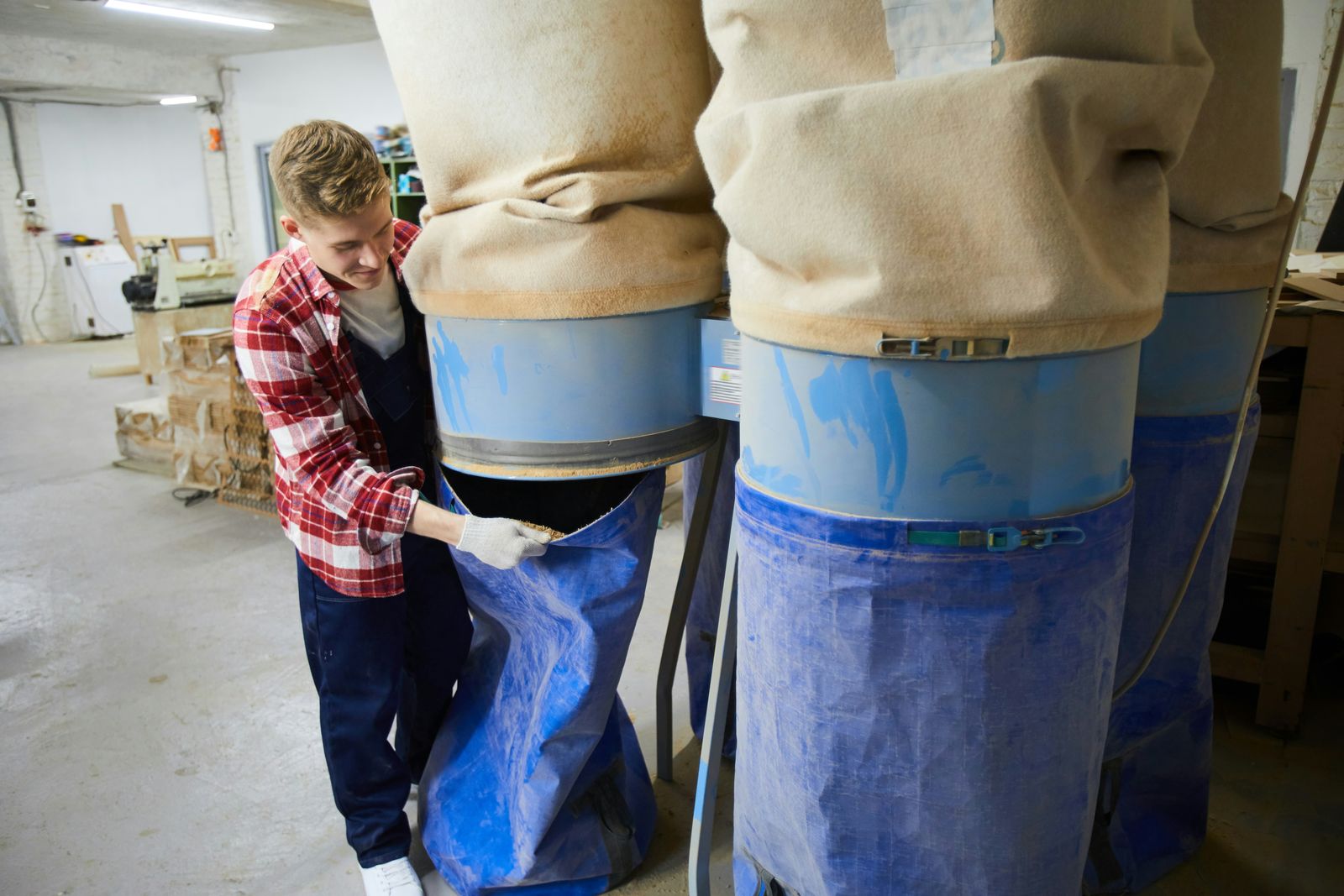
Wood, paper or another dusty technology?
Request a free 30–60 minute online needs assessment. We discuss the technology, the dust sources and your current ATEX status – and I close with a concrete proposal.